

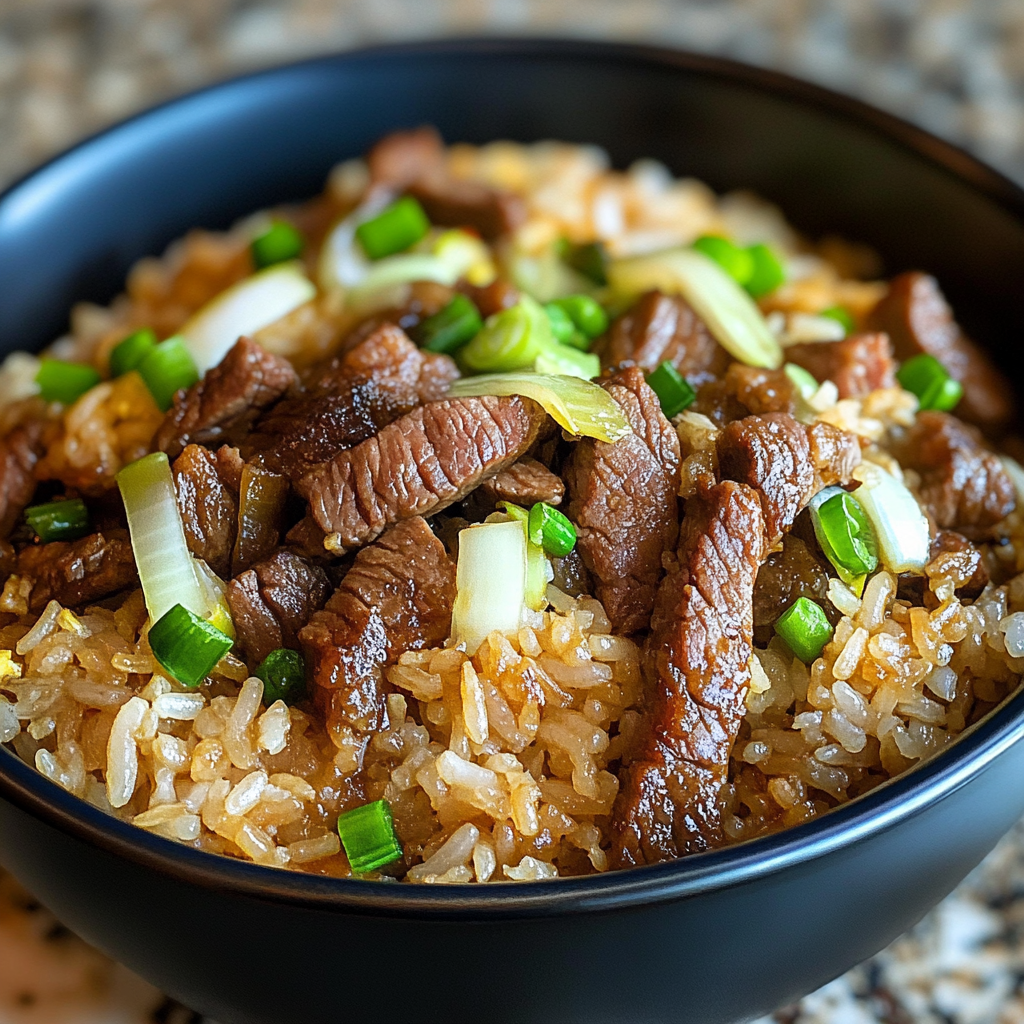
I remember the first time I learned to make Onion Beef Fried Rice – it was during a particularly challenging week in college when homesickness hit me hard. My grandmother called unexpectedly, and somehow, she knew exactly what I needed. Over the phone, she patiently walked me through her signature fried rice recipe, the one that had always made family gatherings feel like home.
The magic of this dish lies in its beautiful simplicity and depth of flavor. Tender strips of beef caramelize alongside sweet onions, creating an irresistible aroma that fills the kitchen. When combined with perfectly crisped rice and that subtle hint of sesame at the finish, it creates a harmony of textures and flavors that’s both comforting and exciting at once.
I urge you to try this recipe the next time you’re craving something satisfying yet simple. Whether you’re a novice cook or an experienced chef, the method is foolproof. Just follow these steps, and you’ll create a dish that transforms humble ingredients into something truly special – one that might just become your own family tradition.
Why You’ll Love This Recipe
- Weeknight Wonder: I’ve found this fried rice saves me on busy evenings when I need something substantial but don’t have hours to spend in the kitchen. The entire dish comes together in under 30 minutes!
- Flavor Transformation: I believe the magic lies in how the beef caramelizes alongside the onions. This simple technique elevates basic ingredients into a dish with remarkable depth.
- Adaptable Base: Over the years, I’ve discovered this recipe works beautifully as a canvas for whatever vegetables are in your fridge. It’s my favorite way to reduce food waste while still creating something delicious.
- Complete Meal in One Pan: I appreciate that this dish offers protein, carbs, and vegetables all in a single skillet. The balance of nutrients makes it satisfying without requiring multiple side dishes.
- Next-Day Delight: I’ve found the flavors actually intensify overnight, making leftovers something to look forward to. This has saved my lunch hour countless times!
Ingredients for This Recipe
- Beef: I always reach for flank or sirloin steak for this recipe. I’ve learned that slicing it thinly against the grain isn’t just tradition—it transforms even budget-friendly cuts into tender, quick-cooking morsels that absorb flavor beautifully.
- Onions: I use a combination that creates magical depth—yellow onions caramelize into sweet ribbons, while white onions maintain a pleasant sharpness. The green onions added at the end provide that fresh, bright finish that ties everything together.
- Rice: I’ve discovered that day-old, cold rice isn’t just a suggestion—it’s essential. Fresh rice contains too much moisture and turns mushy, while refrigerated rice develops the perfect structure for absorbing flavors while maintaining distinct grains.
- Flavor-Boosting Sauces: My secret weapon is balancing soy sauce’s saltiness with the subtle sweetness of oyster sauce—together they create that authentic “wok hei” flavor. I always finish with a drizzle of sesame oil off-heat; its nuttiness elevates rather than overwhelms when added at the right moment.
- Aromatics & Add-Ins: I believe fresh garlic is non-negotiable—it creates an aromatic foundation unlike anything else. Eggs add silky richness when stirred through, creating little pockets of protein throughout. When I’m looking to increase vegetables, frozen peas and carrots fold in effortlessly without additional prep.
How to Make This Recipe
- Prepare the Beef: I start by slicing my steak as thinly as possible against the grain—chilling it for 15 minutes first makes this easier. I toss it with a tablespoon of soy sauce and a teaspoon of cornstarch, which creates a velvety texture once cooked.
- Get Everything Ready: I’ve learned the hard way that stir-frying waits for no one! I dice my onions, mince the garlic, beat the eggs, and measure out all sauces before heating my wok. This preparation ensures nothing overcooks while I’m fumbling for ingredients.
- Sear the Beef: I heat my wok until it’s smoking slightly, then add a tablespoon of neutral oil. The beef goes in next, spread in a single layer without stirring for 30 seconds—this develops that beautiful caramelization I crave. Then I stir-fry it quickly just until the pink disappears, removing it to a plate to prevent overcooking.
- Build the Flavors: Into the same wok, I add a bit more oil, then sauté the white and yellow onions until they soften and begin to turn translucent. The garlic goes in for just 30 seconds—any longer and it becomes bitter. The kitchen smells incredible at this point!
- Cook the Eggs: I push everything to one side of the wok and pour the beaten eggs into the empty space. I let them set slightly before scrambling and integrating them with the onion mixture.
- Fry the Rice: Now I add my cold rice, breaking up any clumps with my spatula. I spread it across the wok surface and let it toast untouched for about a minute—this develops those prized crispy bits. Then I stir everything together, letting the rice grains separate and toast evenly.
- Return the Beef: Once the rice has crisped slightly, I return the beef to the wok along with any accumulated juices—liquid gold that adds flavor! I drizzle the remaining soy sauce and oyster sauce over everything, tossing constantly to distribute the seasonings evenly.
- Add Vegetables: If I’m using frozen vegetables, they go in now. The residual heat thaws them perfectly without overcooking. A quick toss integrates them throughout.
- Final Touches: I turn off the heat before stirring in most of the green onions and drizzling with sesame oil. This timing preserves their bright flavors without diminishing them through excess heat.
- Taste and Adjust: This is where I trust my palate completely. Sometimes I’ll add a touch more soy sauce or a sprinkle of white pepper. The beauty of this dish is in its balance—savory, sweet, and aromatic in perfect harmony.
Expert Cooking Tips
- Temperature Matters: I always ensure my wok reaches smoking point before adding oil. This prevents sticking and creates that restaurant-quality sear on the beef.
- Rice Preparation: I’ve found spreading freshly cooked rice on a baking sheet and refrigerating it uncovered creates the perfect texture. The cool air draws out moisture, resulting in distinct grains.
- Strategic Layering: Over years of making this dish, I’ve learned to cook ingredients separately before combining. This prevents the wok from cooling too much and ensures each component maintains its distinct texture.
- Wok Management: I use my spatula to occasionally press rice against the hot sides of the wok. These rice grains develop a beautiful toasty flavor that elevates the entire dish.
- Sauce Control: I’ve discovered that adding sauces around the perimeter of the wok rather than directly on ingredients allows them to caramelize slightly before mixing, intensifying their flavor.
Proper Storage
- Refrigeration: I store leftovers in airtight containers for up to 3 days. The flavors actually deepen overnight, creating an even more delicious lunch the next day.
- Freezing Option: When I make a double batch, I portion cooled fried rice in freezer-safe containers. It maintains quality for about 2 months and provides emergency meals when needed.
- Thawing Method: I transfer frozen portions to the refrigerator overnight for gentle thawing. This preserves the rice texture better than microwaving from frozen.
- Reheating Secret: I’ve found that adding a sprinkle of water before reheating prevents dryness. A drizzle of fresh sesame oil after warming restores the fresh-made vibrancy.
Variations and Substitutions
- Protein Swaps: I often substitute ground pork or chicken thighs when beef isn’t on hand. The darker meat of chicken thighs provides similar richness, while ground pork offers delightful texture contrast against the rice.
- Vegetarian Adaptation: For my plant-based friends, I’ve had great success replacing beef with firm tofu or tempeh. I press the tofu thoroughly and marinate it in the same soy-cornstarch mixture for comparable flavor absorption.
- Grain Alternatives: When experimenting with lower-carb options, I’ve discovered that cauliflower rice creates a surprisingly satisfying substitute. The key is to dry-fry it first to remove excess moisture before adding other ingredients.
- Sauce Adjustments: For gluten-free guests, I substitute tamari for regular soy sauce and ensure my oyster sauce is certified gluten-free. The flavor profile remains authentic with these simple swaps.
- Spice Variations: When I’m craving heat, I add a tablespoon of sambal oelek or sriracha to the sauce mixture. The spice integrates beautifully with the caramelized onions for a more complex finish.
What Goes with This Recipe
- Asian Cucumber Salad: I love serving this rice with quick-pickled cucumbers dressed in rice vinegar and sesame oil. Their cool crunch and acidity perfectly balance the savory richness of the fried rice.
- Miso Soup: For a complete meal that feels like a restaurant experience, I pair this with a simple miso soup. The warm, umami broth complements without competing with the fried rice flavors.
- Steamed Greens: When I want to add more vegetables, simple steamed bok choy or Chinese broccoli with a light drizzle of oyster sauce provides a fresh, vibrant counterpoint.
- Spring Rolls: For dinner parties, I prepare fresh spring rolls with rice paper, shrimp, and herbs. Their lightness and fresh flavor profile elevate the meal to special-occasion status.
- Chili Oil Eggs: For weekend brunch, I transform leftovers by topping reheated fried rice with a fried egg drizzled with chili oil. The runny yolk creates a luxurious sauce that’s absolutely irresistible.
FAQ
Can I use fresh rice instead of day-old? I don’t recommend it. Fresh rice contains too much moisture and creates mushy results. If pressed for time, spread freshly cooked rice on a baking sheet and refrigerate for 30 minutes.
How do I prevent the rice from sticking? Ensure your wok is extremely hot before adding cold rice, and don’t overcrowd. Working in batches maintains proper temperature for that perfect sear.
Can I make this ahead for a party? Absolutely! I often prepare it up to a day ahead, storing it covered in the refrigerator. Reheat with a splash of water and finish with fresh green onions.
Which cut of beef works best? I prefer flank or sirloin for their balance of flavor and tenderness. Whatever you choose, slicing thinly against the grain is crucial for tenderness.
How can I make this spicier? Add fresh minced chili with the garlic, or stir in chili oil at the end. For consistent heat, mix sriracha with the soy and oyster sauce before adding.
PrintOnion Beef Fried Rice

Discover my grandmother’s Onion Beef Fried Rice recipe – a perfect blend of caramelized beef, sweet onions, and crispy rice that comes together in just 30 minutes. Learn my secrets for restaurant-quality results at home!
- Prep Time: 15 minutes
- Cook Time: 15 minutes
- Total Time: 30 minutes
- Yield: 4 servings
Ingredients
- 1 lb flank or sirloin steak, thinly sliced against the grain
- 1 medium yellow onion, diced
- 1 medium white onion, diced
- 4 green onions, sliced (white and green parts separated)
- 4 cups cold, day-old rice
- 3 tablespoons soy sauce, divided
- 2 tablespoons oyster sauce
- 2 teaspoons sesame oil
- 3 cloves garlic, minced
- 2 eggs, beaten
- 1 cup frozen mixed vegetables (optional)
- 3 tablespoons cooking oil, divided
- 1 teaspoon cornstarch
- Salt and white pepper to taste
Instructions
- In a bowl, toss sliced beef with 1 tablespoon soy sauce and cornstarch. Let marinate for 10 minutes.
- Heat 1 tablespoon oil in a wok over high heat until smoking. Add beef in a single layer and sear for 30 seconds before stirring. Cook just until no longer pink, about 2 minutes total. Remove to a plate.
- Add another tablespoon oil to the wok. Add diced yellow and white onions, cooking until translucent, about 3 minutes.
- Add garlic and stir for 30 seconds until fragrant.
- Push ingredients to one side of the wok. Add remaining oil and pour in beaten eggs. Let set slightly, then scramble and mix with onions.
- Add cold rice, breaking up any clumps. Spread across wok surface and let toast untouched for 1 minute.
- Stir everything together, then let rice toast for another 2 minutes, stirring occasionally.
- Return beef to the wok along with any accumulated juices.
- Add remaining soy sauce, oyster sauce, and frozen vegetables if using. Toss continuously until well combined and heated through.
- Turn off heat. Add sesame oil and most of the green onions, reserving some for garnish.
- Taste and adjust seasoning with salt and white pepper as needed.
- Serve hot, garnished with remaining green onions.
